Why I Sold (Then Re-Bought) the Lumix GX80 – The Perfect Street Photography Camera?
Have you ever sold a camera only to regret it months later? That’s exactly what happened to me with the Panasonic Lumix GX80—a compact Micro Four Thirds camera that unexpectedly became one of my favorite travel and street photography tools. After selling it for "logical" reasons, I missed it so much that I bought it again. Here’s why this underrated gem deserves a second look (and why you might want one too).
Overview: The Lumix GX80
Sensor: 16MP Micro Four Thirds
Lens Used: Lumix 20mm f/1.7 (slow AF but stunning) / Lumix 14mm f/2.5 (pancake)
Key Features:
Tilting touchscreen
Built-in EVF
Slim, retro design
Physical dials for quick adjustments
Why I Sold It (And Why That Was a Mistake)
At first, I thought: "I already have a Sony A7C II—why keep the GX80?" On paper, the full-frame Sony outperforms it. But here’s what I didn’t anticipate:
Pros of the GX80 ✅
Perfect Size: Paired with a pancake lens, it’s discreet yet capable—ideal for street photography.
Ergonomics: Buttons and dials are intuitively placed—I could shoot without looking.
EVF + Tilting Screen: Rare in cameras this small.
Confidence-Boosting Colors: JPEGs looked great on the LCD (unlike my Sony).
Cons ❌
Slow Autofocus (especially with the 20mm f/1.7).
16MP Sensor (fine for web, but cropping is limited).
GX80 vs. Other Micro Four Thirds Cameras
Lumix GM1: Ultra-compact, No EVF, Fiddly controls
Olympus EM10 Mark II: Classic styling, Limited Video Features
Lumix GX9: 20MP sensor, More expensive
Verdict: The GX80 strikes the best balance of size, features, and price.
Who Should Buy the Lumix GX80?
Street/travel photographers who value portability.
Beginners wanting a cheap entry into Micro Four Thirds.
Vintage lovers (the silver version is gorgeous).
Sample Images


Where to Buy
Used (Best Value): MPB - Used Photo & Video Kit: https://geni.us/zvAzdTK
Final Thoughts
The GX80 proves specs aren’t everything. It’s a joy to use, and its flaws fade when you’re capturing shots that feel right. If you’re curious about Micro Four Thirds, this is the camera to try.
Help support this ad-free blog by checking out my store.
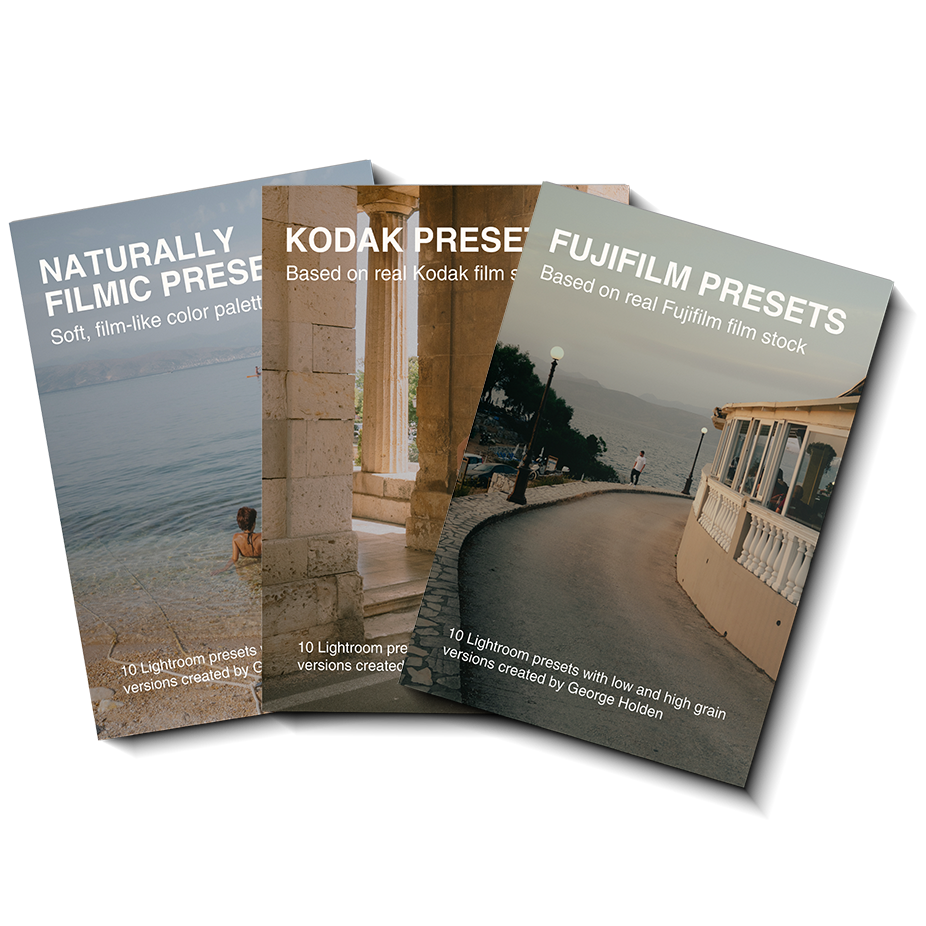
What style can I expect from these presets?
These presets are based on specific Kodak Film Stocks, Fujifilm Film Stocks and various film stocks I have shot in various lighting conditions which you can see in the preview images for each pack.
How many presets are in this pack?
30 - with low and high grain versions for each preset.
Each preset has both .xmp and .dng file types.
Which software supports these presets?
You can choose from these Adobe softwares:
Lightroom Classic
Lightroom CC Desktop
Lightroom CC Mobile
Photoshop (adobe camera raw)